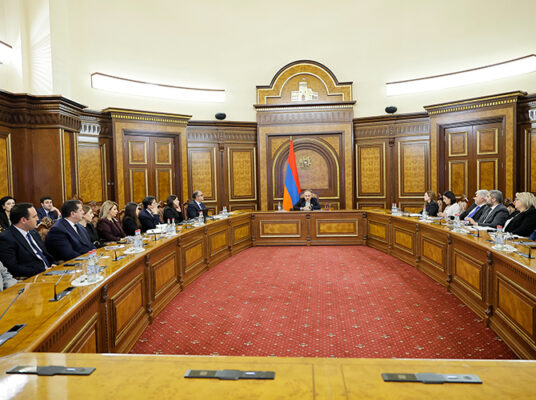
The UN Committee on Enforced Disappearances in Geneva has reviewed Armenia’s work to implement the International Convention for the Protection of All Persons from Enforced Disappearance and safeguard the rights of forcibly disappeared persons and their families.
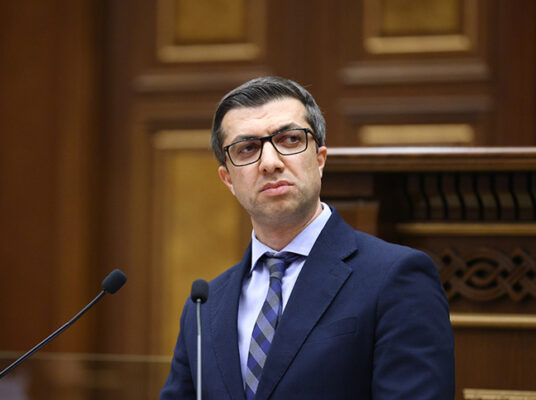
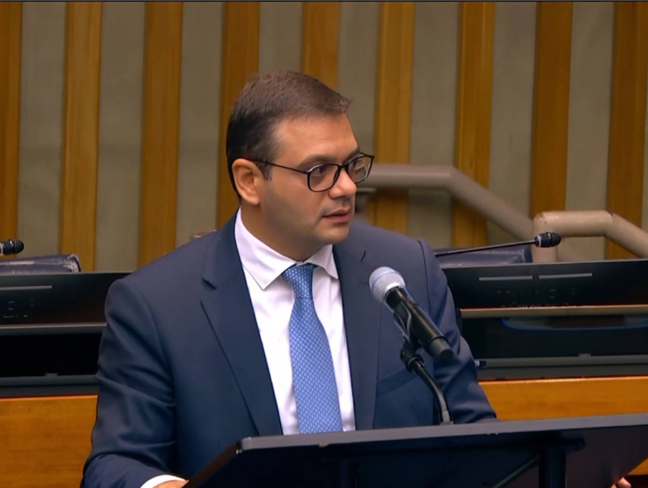
Armenian Deputy Minister of Foreign Affairs and International Trade Robert Abisoghomonyan presented the steps taken by Armenia.
He also separately answered questions from rapporteurs concerning reports previously submitted by Azerbaijani NGOs and the figures on missing persons cited in them, Factor.am reports.
The Armenian Foreign Ministry official stressed that the Armenian side does not believe humanitarian issues should be presented in a one-sided manner, as Azerbaijani NGOs have done. He added that the conflict lasted for decades: 19 Armenians are still being held in Baku, while approximately 800 Armenians have remained listed as missing since the 1990s, and the Armenian side has repeatedly raised the issue of missing Armenians.
“The reports submitted by Azerbaijani NGOs contained a number of figures, and there is no clarity in them that would attest to their reliability. Those figures were taken from Azerbaijani sources, not from the International Commission on Missing Persons (ICMP),” he said, adding that the data presented by the Azerbaijani side also differs from figures published by other Azerbaijani bodies.
He also stressed that Armenia and Azerbaijan have now moved toward cooperation on this issue.
Abisoghomonyan noted that cases of enforced disappearance chronologically covered the 44-day war in 2020, the events of September 2022, as well as the displacement of 130,000 Armenians from Artsakh in 2023. According to the official, these consequences have created significant humanitarian, institutional and legal challenges.
He said one important development in this context is Armenia’s new law concerning persons who went missing under conditions and circumstances resulting from military operations, which has been in force since May 2026. Abisoghomonyan also emphasized the importance of introducing a method for identifying missing persons and working with their families.
In addition, the Armenian deputy foreign minister stressed the importance of cooperation at bilateral and multilateral levels, including with Azerbaijan, viewing the matter exclusively as a humanitarian concern. In his assessment, the peace established in the region has created favorable conditions for such cooperation.
Earlier, several Azerbaijani NGOs submitted reports primarily concerning the First Artsakh War, making various accusations against Armenia. The reports state that “the cases presented, including the taking of children hostage and their subsequent disappearance, occurred in territories of Azerbaijan occupied by the Republic of Armenia. Those territories were under Armenia’s control and administration from the 1990s until 2020.”
The reports also alleged that there was purported evidence of organs being removed from the bodies of children taken hostage.
A representative of Armenia’s Investigative Committee, in turn, said during the hearings that more than 50 cases of enforced disappearance linked to the 44-day war had been recorded, as well as 10 cases in Nagorno-Karabakh in 2023. Currently, approximately 170 Armenian servicemen and 19 Armenian civilians are considered missing.
Responding to a question about progress on the peace agreement, Robert Abisoghomonyan said the Peace Agreement between Armenia and Azerbaijan has already been negotiated and finalized. At this stage, only its signing and ratification remain.
In this context, provisions concerning missing persons and cooperation have already been agreed between Armenia and Azerbaijan, and, in his assessment, the issue now concerns institutionalizing that cooperation.
Regarding the suspension of criminal cases, Abisoghomonyan said that as long as the peace treaty remains unsigned, no such step has been taken. At the same time, an agreement has been reached that after the peace treaty is signed, international claims will be withdrawn in accordance with Article 15.
Representatives of the Armenian side also said that the issue of missing persons has been raised both before the European Court of Human Rights and the International Court of Justice. Proceedings before the European Court of Human Rights are still ongoing, while the International Court of Justice, in its November 12, 2024 decision, accepted the Armenian side’s objections, and Armenia has also submitted its objections before the European Court of Human Rights.