An investigation by Czech outlet Seznam Zprávy found that the pro-Kremlin Rybar media project, previously accused of interfering in Armenia’s parliamentary elections by spreading disinformation, has also operated in the Czech Republic, the Russian service of Radio Liberty reports.
In particular, Rybar filming crews visited the Czech Republic and other European countries, where they recorded interviews with politicians, journalists and experts. According to the outlet, those interviewed were not always clearly informed which project the footage was being produced for.
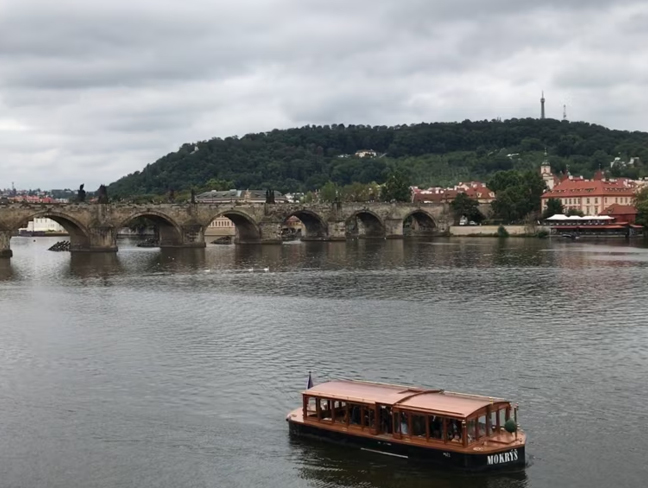
Seznam Zprávy journalists managed to establish contact with members of the network after disinformation expert Bohumil Kartous received an interview request. Seznam Zprávy arranged a meeting in Prague and monitored it using hidden cameras. Russians Vitaly Chashchukhin and Igor Dolmatov, who live in Germany, participated in the filming.
During the conversation, Chashchukhin confirmed that he worked for the Rybar project. After Seznam Zprávy journalists identified themselves and began asking questions about the project, both Russians left the meeting venue.
According to the investigation, Moscow-based Boris Dvorkin was responsible for arranging interviews and recruiting participants. Journalists found that one of his projects received funding from Russia’s History of the Fatherland Foundation, established by decree of Vladimir Putin and chaired by Sergei Naryshkin, director of Russia’s Foreign Intelligence Service. Dvorkin himself denied working for Russian intelligence services in comments to Seznam Zprávy.
Rybar founder Mikhail Zvinchuk has been placed under EU sanctions. The sanctions justification describes him as a Russian military blogger and propagandist who spreads disinformation about the war against Ukraine. It also notes that he is a member of a working group created by Vladimir Putin in December 2022 to coordinate Russia’s mobilization efforts related to the war against Ukraine.
The EU has also described Zvinchuk as the creator of the pro-Russian military Rybar channel, which disseminates information about Russian military operations and Ukrainian positions, while also publishing disinformation and pro-Kremlin propaganda. The project’s Russian-language Telegram channel has more than 1.5 million subscribers, while its English-language version has approached 80,000.
Because of sanctions imposed on Zvinchuk, cooperation with the project could also have legal consequences for people working with him in the EU.
According to the Czech Financial Analytical Office, providing services to a company controlled by a sanctioned person could be regarded as indirectly making economic resources available to that person. Violating sanctions in the Czech Republic can carry a fine of up to 50 million Czech koruna, about 2 million euros, and, in certain cases, criminal liability.
Seznam Zprávy also found that Rybar representatives had already recorded other interviews in the Czech Republic. In particular, former Czech military intelligence chief Andor Šándor confirmed that he had spoken with the filming crew. He said he later withdrew his consent for the recording to be used because he was dissatisfied with the organizers’ conduct and the content of their questions.
The investigation also found that the Czech Republic was only one of the countries where the project planned to operate. Filming was also planned in Slovakia, Serbia, Bosnia and Herzegovina, Austria, Hungary, Belgium and France. According to Seznam Zprávy, this suggested an attempt not merely to organize a single trip, but to build a network producing content for European audiences.
In July 2026, the United Kingdom also imposed sanctions on Rybar. Ten people associated with the project, including members of its leadership and content creators, were also sanctioned. British authorities alleged that Rybar received funding from Russia, spread false narratives about Ukraine and interfered in European elections, including in Moldova and Armenia.
In the United States, the project’s activities drew scrutiny during the 2024 presidential campaign. The U.S. Department of Justice offered a reward of up to $10 million for information about Rybar employees. U.S. authorities alleged that the project conducted an information campaign aimed at fomenting social discord and interfering in the presidential election.
According to U.S. authorities, Rybar previously received funding from Yevgeny Prigozhin, founder of the Wagner private military group, while the project also received commissions from Russia’s state defense conglomerate Rostec.