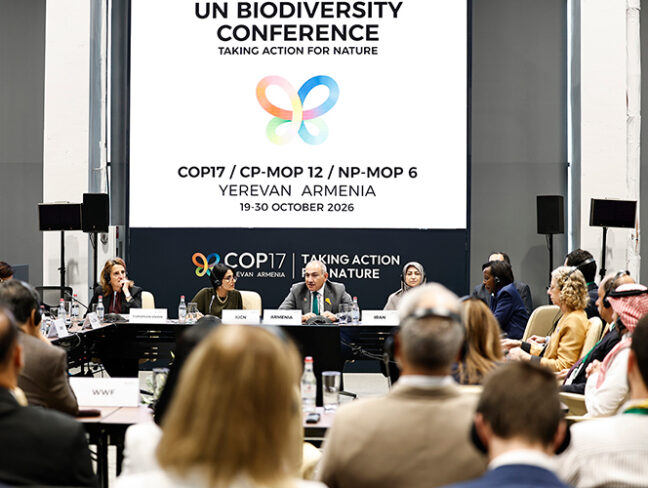
During a discussion at the “Leaders for Nature” Summit in Yerevan, Prime Minister Nikol Pashinyan addressed opportunities emerging after the end of the more than three-decade conflict with Azerbaijan, as well as prospects for environmental cooperation with Turkey, Armenpress reported.
Pashinyan noted that prolonged conflicts negatively affect not only countries’ security and economies but also the natural environment and biodiversity, emphasizing that neighboring countries face shared environmental challenges.
“The domestic consequences of the conflict for biodiversity are visible to us. It was followed by an energy crisis, as a result of which thousands of hectares of forests were cut down in the Republic of Armenia, along with poaching and, essentially, the near destruction of fish stocks in Lake Sevan.
“Using our region as an example, I can say that the essentially unplanned and uncontrolled construction of defensive and fortification structures along borders creates major problems, including for biodiversity. Where forests interfere with defense requirements, those forests are cut down. Where other natural environments create certain obstacles, those environments are altered.
“Conflict zones usually contain minefields, and many animals are simply killed when they trigger those mines. At a certain point, we realize that particular animal species and parts of the natural environment have simply been destroyed,” Pashinyan said.
The head of government emphasized that the consequences of armed conflicts are compounded by the fact that countries involved in conflicts are often deprived of opportunities to work together on biodiversity conservation.
“Of course, peace and biodiversity are extremely important, both domestically and across borders. Environmental issues are part of the peacebuilding process, and after the ratification of the initialed peace agreement with Azerbaijan, environmental matters will be addressed more extensively.
“We are already discussing which environmental areas could offer opportunities for cooperation. We have shared rivers that originate in one country and continue through the territory of another. Biodiversity connects countries, and there is enormous opportunity and potential for cooperation in this area,” the prime minister noted.
Pashinyan particularly emphasized opportunities for cooperation in managing transboundary water resources.
He stressed that several rivers in the region flow through the territories of different countries, making coordinated action by neighboring states essential for their conservation and effective management.
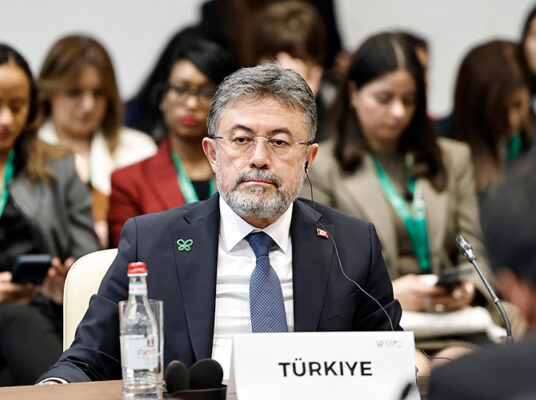
The prime minister also addressed relations with Türkiye, recalling that diplomatic relations have not yet been established between Armenia and Türkiye.
“We have a very positive dialogue, and I am convinced that we will achieve historic changes here as well in the near future. Armenia and Türkiye have experience cooperating on water resource management. Neighboring countries share environmental challenges,” Pashinyan said.