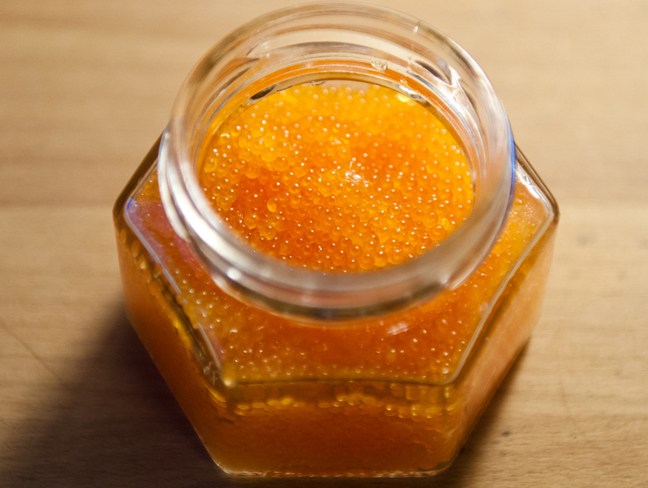
Armenia will ban exports of whitefish roe for six months beginning January 2, 2027, under a government decision aimed at protecting Lake Sevan’s biological resources and biodiversity.
The measure is intended to support food security, ensure the sustainable use of the lake’s biological resources and preserve its aquatic ecosystem.
According to the justification accompanying the decision, measures regulating commercial whitefish fishing have helped maintain relatively stable stocks, although the species’ population has not yet reached optimal levels.
The recorded whitefish biomass in Lake Sevan has fluctuated considerably in recent years, reaching 2,668 tonnes in 2019, 2,345 tonnes in 2020, 5,348 tonnes in 2021, 4,700 tonnes in 2022, 3,974 tonnes in 2023, 1,293 tonnes in 2024 and 3,591.8 tonnes in 2025.
These stocks have allowed commercial fishing to continue, with permitted catches of 300 tonnes in both 2020 and 2021, 600 tonnes annually in 2022 and 2023, 679 tonnes in 2024 and 1,123 tonnes in 2025.
Despite the recent increase in biomass, the government notes that the population has not yet achieved sufficient natural growth or optimal stock levels. Some scientific estimates suggest that optimal conditions would involve total stocks of up to 10,000 tonnes and commercial catches of approximately 2,000 tonnes or more.
The export restriction is intended to prevent potential harm associated with the high international market value of whitefish roe, reduce pressure on the lake’s biological resources and support the species’ natural reproduction.