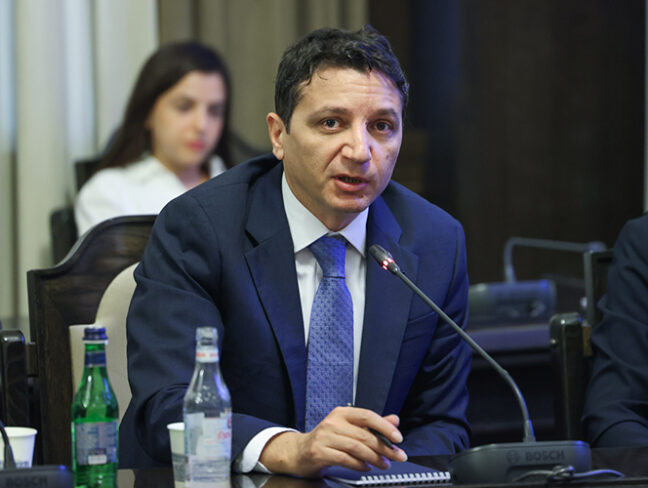
Armenian Finance Minister Vahe Hovhannisyan acknowledged a widening current account deficit, attributing it partly to strong economic activity and rising domestic demand.
Presenting the results of parliamentary committee discussions on the 2027 draft state budget, Hovhannisyan said the opposition’s main concerns focused on the trade and current account deficits, their financing and Armenia’s external economic stability.
“Yes, we have seen some widening of the current account deficit, which we describe in detail in our reports, but we also explain its nature in detail,” he said, noting that the increase reflected not only declining exports but also stronger domestic demand, Panorama.am reports.
The minister rejected the opposition’s assessment of Armenia’s external economic position, saying it presented a misleading picture of instability.
Hovhannisyan explained that the current account covers trade in goods and services, net income and transfers between Armenia and the rest of the world. He stressed that assessing the deficit requires examining not only its size but also its causes, financing and broader economic impact.
According to the minister, Armenia has managed to finance its current account deficit while increasing international reserves to approximately $7.2 billion at the end of October 2026.
He described the figure as an all-time high, more than double the level recorded in 2021, and emphasized the importance of international reserves in maintaining economic stability and resilience to external shocks.
Hovhannisyan also said Armenia was becoming increasingly attractive to international capital and private investors.
He stressed that the government had not borrowed externally in foreign currency to finance the current account deficit. According to the minister, the external and foreign-currency component of government debt has declined and currently amounts to 4.5% of GDP.