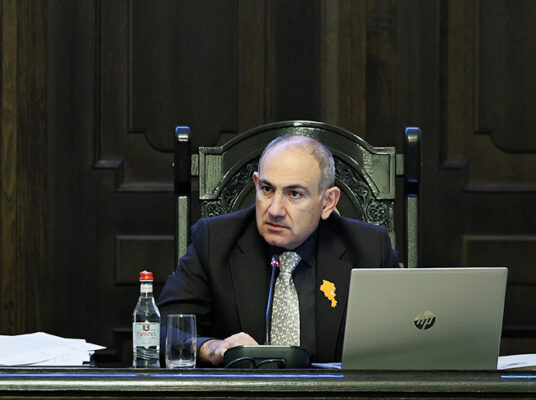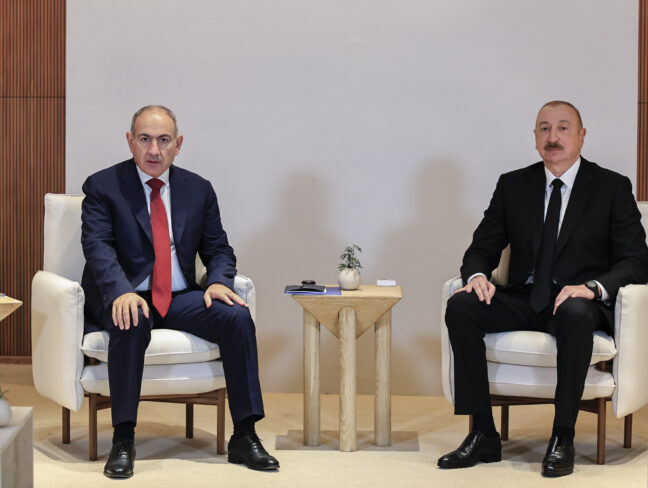
Armenian Prime Minister Nikol Pashinyan has said he discussed the fate of missing persons with Azerbaijani President Ilham Aliyev in Dublin, including ways to establish more institutionalized cooperation between the two countries.
Speaking at the opening of the conference “The Fate of Missing Persons: Humanitarian Dialogue and Cooperation,” Pashinyan said that resolving the issue requires international assistance, as many potential answers lie beyond Armenia’s territory and the government’s jurisdiction, Sputnik Armenia reports.
According to Pashinyan, cooperation with Azerbaijan is the most effective way to clarify the fate of those who went missing as a result of the conflict, Armenpress reports.
The prime minister described the issue as one of the most painful consequences of the conflict, emphasizing the difficulty of providing answers to families when essential information remains unknown.
“Sometimes, when we hold discussions with relatives of people whose whereabouts are unknown, they understandably say that they want specific answers to specific questions. The most difficult aspect of this situation is that there simply are no answers, and the challenge is to find them,” he said.
Pashinyan stated that Armenia is currently dealing with approximately 1,000 missing persons, including 777 people missing since the early 1990s and others whose whereabouts remain unknown following the 2020 war and subsequent developments.
He said the Dublin discussions had addressed practical ways to make cooperation with Azerbaijan on missing persons more systematic and institutionalized.
One of the main obstacles, according to the prime minister, is deep-rooted distrust, both between the two countries and between the Armenian government and families of missing persons.
Pashinyan acknowledged that some relatives suspect the authorities of withholding information. He said that despite raising the issue repeatedly through high-level international contacts, he did not possess undisclosed information about their missing family members.
He also described a similar lack of trust between Armenia and Azerbaijan.
“Azerbaijan believes that we have information we are not sharing with them, while we naturally believe that they have information they are not sharing with us,” Pashinyan said.
He stressed that the issue carries humanitarian, political, socio-psychological and moral dimensions, and that the Armenian government bears primary responsibility for seeking answers to families’ questions.
The prime minister highlighted the experience of international organizations, particularly the International Committee of the Red Cross (ICRC), expressing hope that the conference would help strengthen cooperation between state institutions, international organizations and relatives of missing persons.
He said the government would support families in establishing more structured relationships with international organizations capable of providing expertise and guidance.
Pashinyan reaffirmed Armenia’s readiness to deepen cooperation with Azerbaijan, noting that information relevant to each country’s missing persons may be located on the other’s territory.
“Logically, the answers to many questions of interest to us are objectively to be found in Azerbaijan. Exactly where they are is a matter for further discussion and clarification,” he said.
He added that Armenia was likewise prepared to help clarify questions raised by Azerbaijan, including through cooperation with international partners.