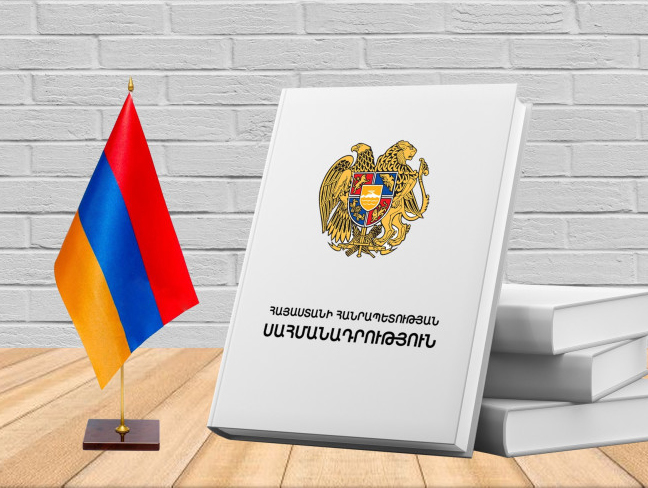
Armenian Prime Minister Nikol Pashinyan has described the adoption of a new Constitution as a step toward establishing what he calls the Fourth Republic, reforming the justice system and consolidating peace.
In an address marking the publication of the draft Constitution, Pashinyan highlighted Article 8, which defines ensuring peace as the objective of Armenia’s foreign policy.
“What distinguishes the Fourth Republic from the Third Republic? The absence of conflict,” he said.
Pashinyan argued that the Third Republic had been shaped by a logic of conflict rather than the protection of citizens’ security, freedoms and well-being. He linked that approach to the 1990 Declaration of Independence, which he said had contributed to confrontation, emigration and the emergence of a corrupt political and economic system.
The prime minister accused former leaders and influential figures, including Robert Kocharyan and Serzh Sargsyan, of using nationalist rhetoric to conceal the misappropriation of public resources. He also criticized the current judicial system, claiming that constitutional protections had allowed individuals he accused of corruption and other crimes to evade accountability.
According to Pashinyan, one of the objectives of the proposed Constitution is to free the judiciary from oligarchic influence and make it accountable to citizens.
“As a result of the 2018 People’s Nonviolent Velvet Revolution, power was returned to the people. With the adoption of the new Constitution, the state must be returned to the people. With the adoption of the new Constitution, peace must be returned to the people,” he said.
Pashinyan described the proposed constitutional commitment to peace as a rejection of what he called the conflict-oriented logic of the 1990 Declaration of Independence.
He rejected suggestions that the reform was being pursued under external pressure, arguing that its purpose was to ensure Armenia’s long-term independence and overcome its historical role as a regional outpost.
“Our objective is to transform the Republic of Armenia from an earth-dug trench into a crossroads of peace,” he said, adding that the country must also maintain an army capable of independently defending its internationally recognized territory and state borders.
The prime minister pledged that adopting the new Constitution would pave the way for signing and ratifying a peace agreement with Azerbaijan and establishing what he described as institutional, lasting and irreversible peace.
“I am putting all my political, personal and moral credibility on the line in this matter,” Pashinyan declared.
He argued that Armenia now had an opportunity to achieve both peace and independence, which he portrayed as a historic departure from earlier periods when the country had been forced to choose between security and statehood.
Pashinyan also claimed that the Karabakh conflict and the negotiations surrounding it had brought Armenia close to losing its statehood. He accused his political opponents, whom he referred to as the “three-headed party of war,” of seeking to undermine the current peace process.
Turning to the proposed constitutional referendum, Pashinyan renewed his appeal to the parliamentary opposition to support putting the draft to a public vote.
He said the ruling Civil Contract faction lacked six parliamentary mandates needed to call the referendum and therefore required opposition support.
The prime minister repeated his proposal to make his political future conditional on the outcome.
“If the people vote against the Constitution and the new Constitution is not adopted, I will resign and step down as prime minister,” he said.
If voters approve the Constitution, Pashinyan pledged not to seek the premiership in the next parliamentary elections, whether regular or early.
He said he would use the remaining period before those elections to complete the institutionalization of peace.
Pashinyan concluded by urging the opposition not to obstruct the referendum, arguing that citizens should have the final say on the country’s constitutional future.