Egypt's interim leader on Sunday said that the general public opposes the inclusion of the Muslim Brotherhood in the political process because he said it uses violence.
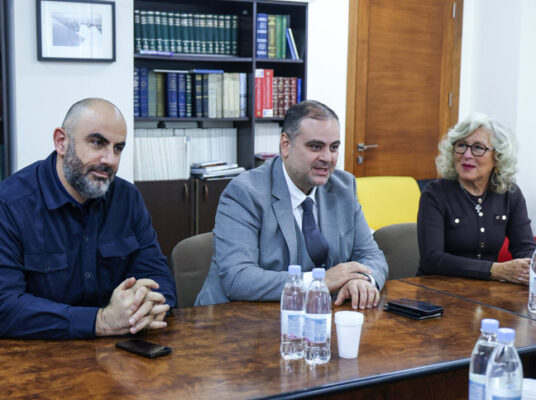
According to the Associated Press, in a wide-ranging interview broadcast late into the night on CBC television, Adly Mansour said that any member of the Brotherhood who renounces violence and gives up membership in the group is welcomed to join the upcoming elections.
"If people are convinced (and vote for them), they are welcome," said Mansour, the interim president installed in July after the military removed Islamist President Mohammed Morsi, a Brotherhood member, following mass protests against him.
Mansour said he can't open negotiations with the group, which he blamed for the wave of violence that hit Egypt after Morsi's ouster. The military-backed government has labelled it a terrorist organization after it blamed it for orchestrating violence following a major attack against a police headquarters
"Negotiate with whom? Those who committed violence, incited it? … The whole public would stand against me."
The Brotherhood denies it uses violence in its opposition to Morsi's ouster, and the government has offered little evidence to prove the link between the attacks and the group.
Mansour also denied complaints that the crackdown against the group and those who oppose the interim government has been heavy handed, saying that security forces only pursue those who carry out violent acts.
Since Morsi's ouster, thousands have been detained at protests by his supporters. Hundreds have also been killed.
While Mansour acknowledged that some abuse by the police does take place, he said it was not systematic.
"I don't deny that some members of the institution can carry out repressive acts, but it is not systematic," he said, according to the AP.
Mansour said he expects he will hand power over to a new president within two months, when results of the presidential elections are announced. The date for the election has yet to be announced but it will likely be held in April.
The country's powerful military chief, Field Marshall Abdel-Fattah el-Sissi, has emerged as the only strong candidate for the presidency, and would likely win if he runs, given the backdrop of rising nationalist sentiment amid fears of militant Islam.
Mansour said he expects the race to be competitive, despite the criticism. He said it is up to el-Sissi to announce whether he will run or not.
Only one civilian candidate so far, leftist politician Hamdeen Sabahi, has announced he will run. Sabahi has also sharply criticized the law.