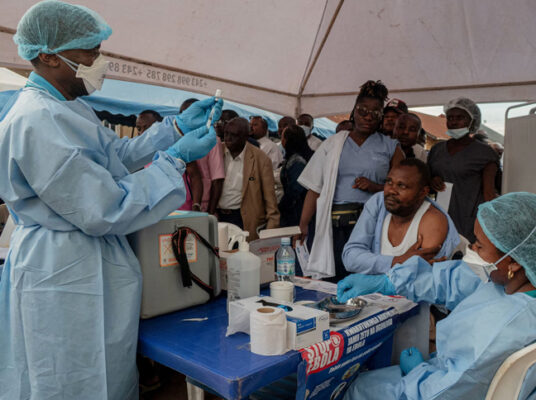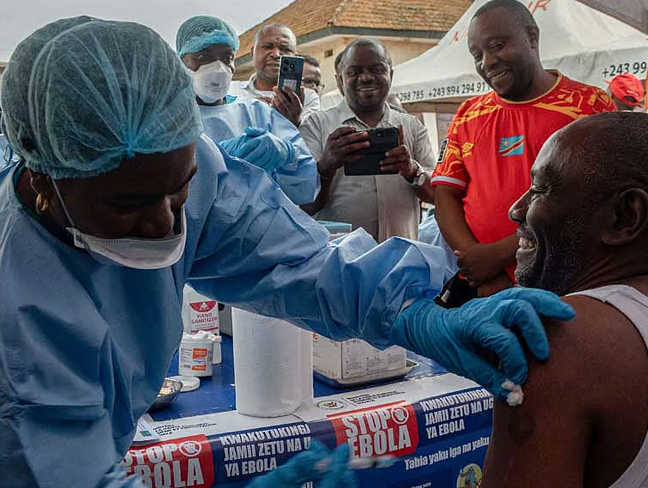
The World Health Organization (WHO) has backed clinical trials of two experimental vaccines against the Bundibugyo Ebola virus amid a major outbreak in Africa that has reportedly killed more than 5,300 people.
The vaccines are intended to protect against the rare Bundibugyo virus, for which no vaccine has yet been approved, Euronews reports.
Speaking at a press conference in Geneva, WHO Director-General Tedros Adhanom Ghebreyesus announced that the organization’s expert groups had recommended including two vaccine candidates in a clinical trial specifically targeting the virus.
The University of Oxford, the Serum Institute of India and pharmaceutical company Moderna are involved in developing the vaccines.
The trials will be conducted by the Democratic Republic of the Congo’s National Institute for Biomedical Research, with support from WHO and other international partners.
Tedros stressed that vaccines, while essential, cannot replace established measures to contain the outbreak. These include early medical care, contact tracing, patient isolation, safe and dignified burials, and cooperation with local communities.
According to official figures released by the Democratic Republic of the Congo as of October 31, more than 10,000 infections have been recorded since the outbreak began in May, with 5,103 deaths. The reported case fatality rate exceeds 50%.
Cases have also been reported in Kenya, Nigeria and Uganda, although the DRC remains the hardest-hit country.
Several countries, including Ghana and the United States, have introduced travel restrictions on arrivals from the DRC.
The WHO chief criticized the measures, warning that they could discourage countries from reporting outbreaks and undermine efforts to contain the disease.
“We urge countries that have imposed travel restrictions to lift them,” Tedros said.
The Africa Centres for Disease Control and Prevention (Africa CDC) has expressed a similar position, emphasizing that travel restrictions should not be considered a primary public health response to infectious disease outbreaks.