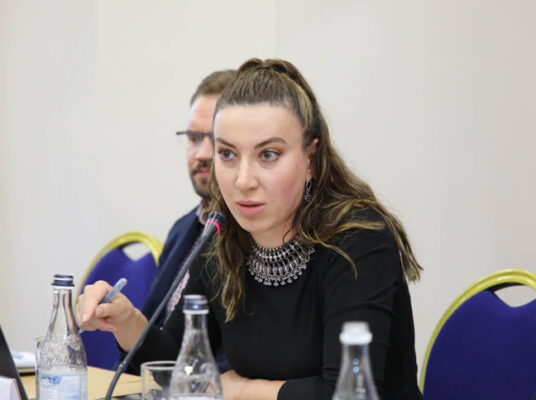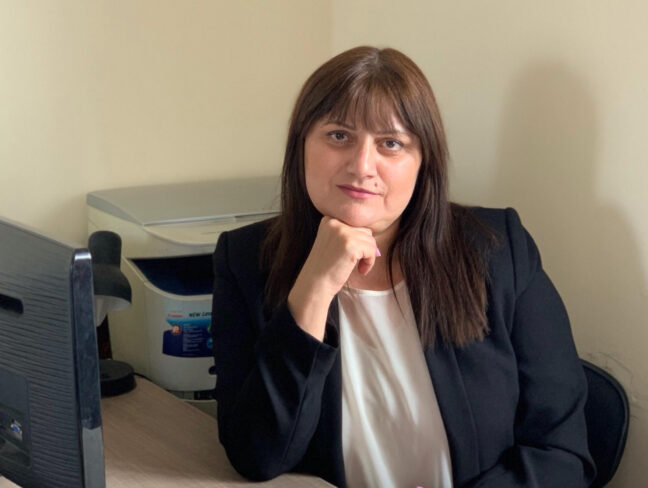
Artsakh National Assembly member Arevik Petrosyan has spoken about electing a new parliamentary speaker, the governance crisis, and the need to create a virtual state of Artsakh, stressing the importance of unity.
She said that when addressing the election of a new speaker of the Artsakh National Assembly, it is necessary, in her view, to revisit developments that took place in Artsakh, as current events have become a continuation of the governance crisis that began there, Pastinfo reports.
To emphasize her point, the lawmaker recalled remarks by Artsakh’s third president, Bako Sahakyan.
“In 2007, after he had just been elected, we met and I asked him, ‘How are things going?’ Bako Sahakyan had been president for only a few months. He said that if Armenia were not there, everything would completely fail for us, and it would be very difficult without Armenia. He said, ‘We cannot govern without Yerevan.’ I remember those words well. The point is that the Republic of Armenia always supported our leadership. Artsakh was not governed entirely on its own; Armenia provided substantial support, including state support in terms of governance. Today, all of that is gone. We do not have that support, and the governance problem has further deepened the existing crisis. It continues, while personal factors have also begun to play a major role,” she said.
According to Petrosyan, Armenia’s leadership was aware of those realities.
“They knew that we were very predictable, knew our behavior, and knew us. They left everything up to us, knowing perfectly well that we would ruin everything. The issue is governance. We brought the governance crisis from Stepanakert here, and we have been unable to resolve it here either. It remains urgent and continues to deepen. Who ‘took’ what is irrelevant now. As a lawmaker, I say responsibly that the major looters have stepped aside because there is nothing left to loot here either. There is no money anymore, no large sums. And because there is none, nobody talks about Artsakh anymore,” she explained.
The lawmaker also stressed that unless urgent problems are addressed, the Artsakh parliament could gradually dissolve into its surroundings and disappear.
“We have a great deal of work to do. I proposed to State Minister Nzhdeh Iskandaryan that we collect the data of all Artsakh residents. Whatever information exists must be preserved electronically. We should create our virtual state, establish our government and create a website where people can log in and vote. One day we will grow old and fall ill; we are not eternal. Should the National Assembly not function after us? What will happen in 10 or 20 years? We need to devise a mechanism for electing new lawmakers and new leadership. We must regulate all of this because what we currently have has exhausted its potential,” she said, stressing that all Artsakh Armenians should unite around the issue.
Petrosyan believes that under the current circumstances, a speaker of the Artsakh National Assembly could be elected by consensus.
“For example, I proposed a very young candidate, Aramayis Aghabekyan. He is young, energetic, will not ‘pocket’ money, has a vision, is forward-looking and knowledgeable. But many disagreed with me. In any case, we need to unite around that body,” the lawmaker said, adding that Ashot Danielyan was also a very suitable candidate.
Arevik Petrosyan also said that despite having no personal sympathy for Samvel Babayan, she believes that, under the current circumstances, Artsakh needs a leader like him.
“Samvel Babayan has a major advantage. Back in Stepanakert, during the final months, I proposed several times that Arayik Harutyunyan appoint Samvel Babayan as state minister. We could at least have tried that. At the National Assembly’s final joint session on August 28, 2023, when we discussed our issues throughout the night, I again proposed appointing him. Today, we have no one else with his background, and most importantly, he possesses information. He led our army during the most difficult period and worked with leaders such as Robert Kocharyan, Vazgen Sargsyan and Serzh Sargsyan,” she said, stressing that personal considerations should be set aside.