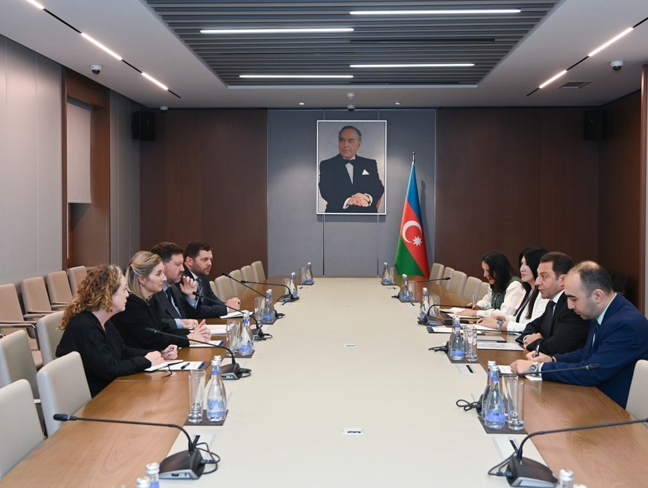
The U.S. Embassy in Armenia has provided clarifications regarding U.S. Chargé d’Affaires David Allen’s visit to Baku, where he met with Elnur Mammadov, deputy to Azerbaijani Foreign Minister Jeyhun Bayramov, RFE/RL reported.
“As TRIPP moves from vision to implementation, this administration’s priority requires close regional coordination. The U.S. Embassies in Yerevan and Baku worked jointly to organize the Chargé d’Affaires’ visit to Baku to support the full implementation of TRIPP and the commitments undertaken under the U.S.-Armenia framework agreement,” the U.S. Embassy in Yerevan said.
Baku said the meeting addressed steps to advance the peace process between Azerbaijan and Armenia and ensure long-term and sustainable peace, work carried out on the “Trump Route,” as well as the establishment of the TRIPP Development Company.
The U.S. embassies in Armenia and Azerbaijan have not yet issued official statements regarding the American diplomat’s meeting.
Azerbaijani Foreign Minister Bayramov had said that U.S. partners regularly provide them with information regarding the Armenian-American TRIPP project.
“That is entirely natural, since implementation of this project is impossible without Azerbaijan’s participation. We are told that work is continuing. The start of physical work has been postponed until 2027,” Jeyhun Bayramov said.
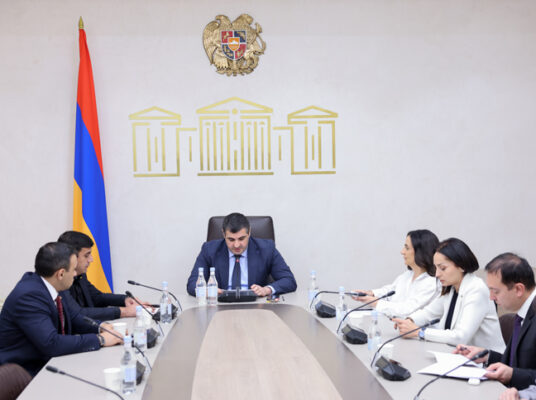
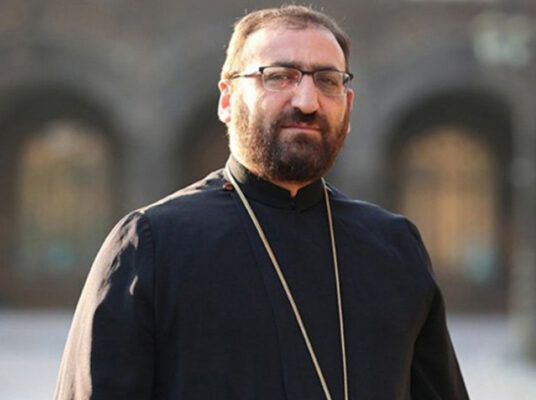
Sargis Khandanyan, the ruling party chairman of the National Assembly’s Standing Committee on Foreign Relations, was not informed about the meeting held in Baku the previous day, but Allen’s visit was not surprising to him, given the diplomat’s work in Armenia.
“Through this route, the Republic of Azerbaijan will be connected with the Nakhichevan Autonomous Republic, so it is obvious, isn’t it, that Azerbaijan is interested in TRIPP being implemented as quickly, efficiently and effectively as possible, so that its connection with Nakhichevan becomes shorter and more efficient. Naturally, Azerbaijan is also interested in the processes taking place around TRIPP. Armenia and Azerbaijan also discuss these issues with each other in a bilateral format, so there is nothing surprising here,” Sargis Khandanyan said.
A question was also raised as to whether Armenia had authorized the United States to discuss in Baku issues concerning a route passing through Armenian territory.
“Next week, we have guests from Germany. I also intend to discuss the details of TRIPP with our German partners. I do not have authorization, nor do I need authorization from the United States to talk about this,” the Civil Contract lawmaker said.
Through various documents, Armenia has also undertaken a commitment to ensure unhindered movement via TRIPP. Although those documents refer to mutual benefits, Baku has for a year refrained from clarifying whether the same conditions will also apply to travelers from Armenia. This has raised the question of whether Yerevan insists on the principle of reciprocity. Sargis Khandanyan considered the model and technical arrangements on the Azerbaijani side to be secondary issues.
“Of course, it would be very good if that happens as quickly and efficiently as possible,” he said.
Asked why the issue is important for Azerbaijan but secondary for Armenia, the lawmaker replied: “Well, as I mentioned, Azerbaijan wants a shorter and more efficient connection with another part of its territory, Nakhichevan. But this is also good for us. We also want that route to be as fast as possible and without additional complications.”