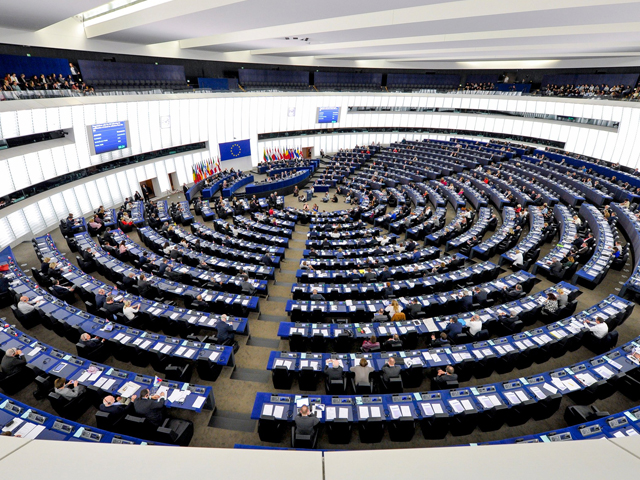
The European Parliament will vote on September 15 on legislation liberalizing about 80% of Armenia’s exports to the EU for a two-year period. The final agenda for the September 14-17 plenary session has been approved.
The European Parliament’s press service said legislation providing temporary trade liberalization measures for goods exported from Armenia to the European Union has been included on the agenda of the plenary session in Strasbourg, Factor.am reported.
“The trade liberalization measures were adopted last week by the European Parliament’s Committee on International Trade (INTA) without any amendments to the original legislative proposal. The same is expected in plenary: no amendments or deviations from the original legislative proposal are anticipated,” European Parliament spokesperson Daniel Koster said.
On September 2, the Council of the EU endorsed the European Commission’s proposal, thereby accelerating the process of adopting the regulation in the European Parliament. The European Union thus plans to liberalize about 80% of exports from Armenia.
“Since the Council of the European Union also backed the temporary trade measures last week, following next week’s parliamentary vote, only the signatures of the presidents of the two institutions and publication of the regulation in the Official Journal of the EU will remain,” Koster said.
The regulation will enter into force on the day following its publication in the Official Journal of the EU and will apply for two years from that date.
The temporary suspension of customs duties will not be unconditional. To benefit from the preferential trade regime, Armenia will have to comply with rules of origin for goods, ensure administrative cooperation with the EU and refrain from introducing new trade restrictions on goods imported from the European Union.
Armenia will also be required to respect the fundamental principles of the EU-Armenia Comprehensive and Enhanced Partnership Agreement (CEPA), including democracy, the rule of law and human rights.
The European Commission presented the initiative after a ban on exports of Armenian goods to the Russian market. According to Brussels, the proposed measures are intended both to mitigate the impact of Russian restrictions and strengthen EU-Armenia trade relations within the framework of the Comprehensive and Enhanced Partnership Agreement (CEPA).
The planned preferences could cover product categories equivalent to nearly 99% of Armenia’s exports of fresh fruit, vegetables and plants to Russia. They could also include product categories corresponding to more than 91% of beverage and spirits exports.