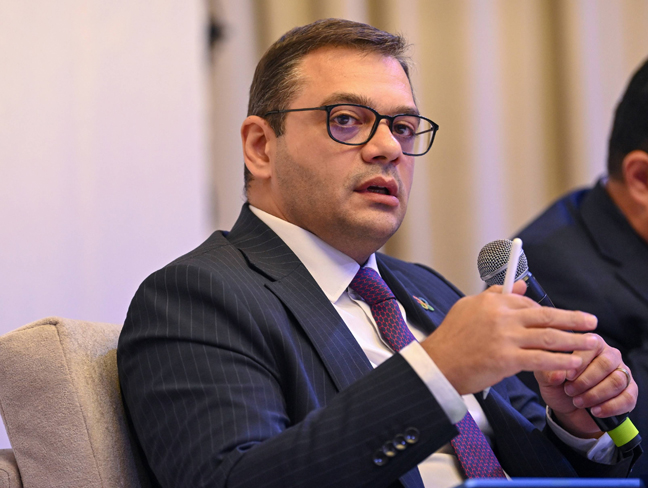
Armenian Deputy Foreign Minister Robert Abisoghomonyan has presented the priorities of Armenia’s COP17 presidency, emphasizing international cooperation, biodiversity conservation and the importance of national education systems.
Abisoghomonyan participated in a high-level panel discussion titled “The Role of National Education Systems in Promoting Food Security and Implementing the Global Biodiversity Framework” as part of COP17.
Addressing the agenda of Armenia’s COP17 presidency, Abisoghomonyan outlined the Armenian side’s priorities. In particular, he stressed the importance of integrating biodiversity conservation issues into broader economic and social development programs while emphasizing the need to strengthen international partnerships.
The deputy foreign minister also highlighted opportunities for international cooperation in developing countries’ national capacities. In his assessment, such cooperation helps attract professional expertise and financial assistance while translating commitments undertaken at the international level into concrete national initiatives and measurable results.
As an example of successful partnership, Abisoghomonyan referred to the cooperation developed over the years between Armenia and the United Nations World Food Programme (WFP). In this regard, he attached particular importance to the national School Feeding Programme, emphasizing the need to share Armenia’s experience gained through the initiative with international partners.
He drew special attention to the significance of international partnerships and multilateral diplomatic efforts. He emphasized that biodiversity protection, food security, educational development and the Sustainable Development Goals are interconnected areas whose advancement requires consistent cooperation between countries and international organizations.
In this context, the deputy minister stressed the importance of expanding cooperation between various international initiatives and sectoral priorities. He underscored the need to develop coordinated and complementary approaches and intensify joint actions aimed at fulfilling commitments undertaken at the global level.
Concluding the discussion, Abisoghomonyan reaffirmed the importance of effective multilateral cooperation, noting that it should not be limited to drafting international agreements and assuming general commitments. According to him, the consistent implementation of these agreements is essential to ensuring tangible, visible and long-term results at the national level in every country.