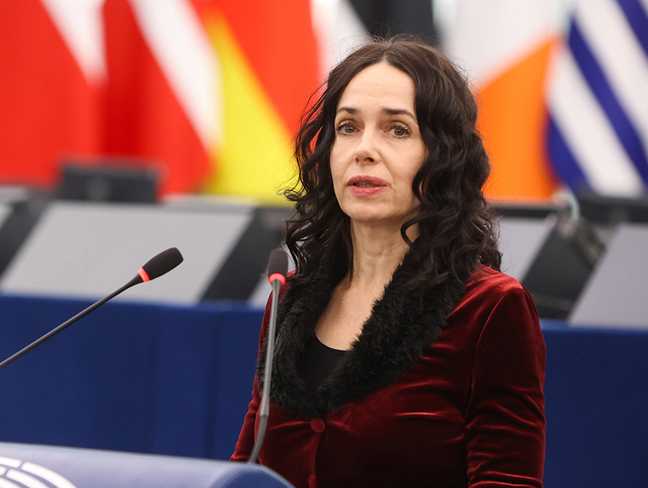
The European Parliament’s standing rapporteur on Armenia, Miriam Lexmann, a member of the European People’s Party, has stressed the importance of reducing what she described as government pressure on the Armenian Church.
In an interview with Factor TV, Lexmann said the relationship between the Armenian authorities and the Armenian Apostolic Church was a particularly sensitive issue for her.
“One issue I feel very strongly about is the pressure on the Armenian Church within Armenia. I have spoken with Armenia’s political representatives and tried to ask them to repair relations, despite all the existing problems, some of which I understand.
“But it remains extremely important that the Armenian Apostolic Church enjoys the highest level of trust among citizens. That is why it is essential to reduce government pressure on the Church and make an effort to restore relations, so that the Armenian Apostolic Church can continue playing its crucial role as the cultural and moral foundation of the Armenian people.
“It is also a symbol of freedom that stands above human authority, something all Armenians have looked to as a symbol of hope during difficult times and throughout past centuries,” she said, according to Factor.am.
Addressing Armenia’s European aspirations, the rapporteur said Prime Minister Nikol Pashinyan must be extremely cautious, because “we see in Ukraine what it means when a country stands up to Russia.”
“I was in Armenia during the elections, and as far as I have been following developments, the situation remains very tense. Society is deeply divided.
“But, on the other hand, I believe the elections were more of a kind of referendum on where people want to see their country in the future: whether they want to be part of European society or remain on its periphery, perhaps under Russian influence,” she said.
Lexmann added that, from this perspective, the decision was very courageous.
“Of course, I understand that Prime Minister Pashinyan must be extremely cautious, because we see in Ukraine what it means when a country stands up to Russia.
“So I understand that, on the one hand, society is quite divided, while on the other, the political leadership must be very careful about how it guides public sentiment and the vision for the country’s future, in which it will one day have stronger ties with the European Union.
“I can also say that I greatly appreciate the efforts to restore relations with Turkey. The Armenian side is making enormous efforts, and I think it is very disappointing that Turkey is not responding with similar efforts.
“It would be a historic moment if Armenia and Turkey could somehow come to terms with the past and begin a new future,” she said.
Asked about relations with Azerbaijan, Lexmann was more critical of the European Union’s policies.
“I think the European Union is making a major mistake here. We are failing to take a very clear position toward the Azerbaijani government and the Aliyev regime and to exert pressure.
“We know that Azerbaijan is, in practice, also obstructing the normalization of relations between Turkey and Armenia. And we know that Azerbaijan continues to hold Armenian political prisoners from Nagorno-Karabakh in captivity.
“I spoke about this on October 7 at a plenary session of the European Parliament, when we were discussing another case of human rights violations in Azerbaijan, as well as the sentencing of people through sham trials.
“We are trying to defend people who are persecuted in Azerbaijan for their views, political opinions and other reasons. I also raised the issue of Armenian prisoners,” she said.
Lexmann expressed confidence that the European Union has the necessary influence and means to change the situation and translate its declared democratic values into practical action.
Regarding a possible Armenian application for European Union membership, Lexmann said she did not know when Nikol Pashinyan intended to submit the relevant application.
In her assessment, such an application would be received appropriately. However, she argued that it was more important for Armenia and the European Union to focus for now on realistic steps to develop their relationship.
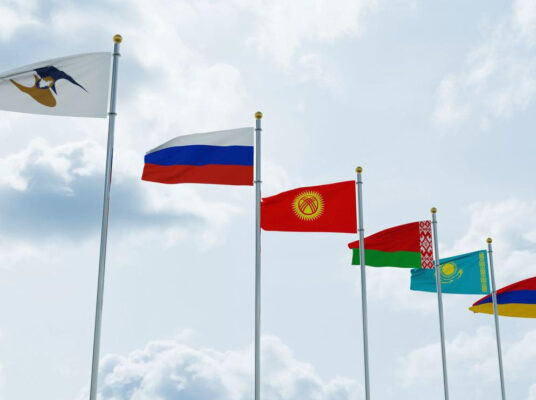
She emphasized that Armenia remains a member of the Eurasian Economic Union (EAEU), which creates certain constraints on its prospects for joining the European Union.
At the same time, the European lawmaker urged caution in making decisions, particularly given the pressure exerted by Russia.
In her view, both sides should prioritize initiatives that deliver direct benefits to citizens of Armenia and the European Union.
Among these priorities, she highlighted the development of economic cooperation, accelerating the visa liberalization process, strengthening people-to-people contacts, and expanding ties between businesses and educational institutions.
Lexmann noted that such practical achievements could prove more valuable than symbolic political steps, which may be difficult to implement under complicated geopolitical conditions.
Addressing claims that Europe is not waiting for Armenia, Lexmann acknowledged that European countries may hold differing positions.
Nevertheless, she expressed confidence that EU member states recognize the importance of having partners in the South Caucasus and developing relations with Armenia.
Asked what Armenia should do, Lexmann singled out compliance with the requirements of the visa liberalization action plan.
She noted that Armenia would need to undertake a number of specific measures, including technical steps, as part of that process.
Another important priority, she said, is bringing Armenian products into compliance with the quality standards established under European Union legislation.
According to Lexmann, increasing the volume of products that meet European requirements could help deepen trade relations between Armenia and the EU and create new economic opportunities.
European Union trade preferences for products of Armenian origin entered into force on October 10.