The Akanates (Eyewitness) observation initiative recorded 217 problems and potential electoral violations across 408 polling stations during the October 25 local government elections.
In its published report, the observation initiative outlined problems identified both during the pre-election period and on voting day.
According to the report, the electoral process covered 21 communities across Armenia’s 10 provinces, encompassing 353 settlements and 477,721 registered voters.
Pre-election monitoring was conducted by 18 long-term observers who assessed the situation in 19 communities. On election day, 85 observers working in 43 mobile teams visited and monitored 408 polling stations.
The observation mission summarized its main findings, highlighting issues related to “political competition, the use of administrative resources, campaign restrictions and the protection of voters’ rights.”
Regarding political competition, 45 electoral lists were registered in 19 communities, representing 17 different political parties and alliances. In five communities, however, the ruling Civil Contract party was the only participant in the elections. Observers assessed that this limited voters’ ability to choose among different political forces, although they retained the right to vote against the sole list presented.
Concerning the use of administrative resources and election campaigning, observers documented cases in which community officials, employees of educational institutions and staff of municipally administered organizations participated in campaign events. In some instances, such participation took place during working hours. Observers also recorded cases of children being systematically involved in campaign activities organized by various political groups.
Concerns were also raised about compliance with restrictions on charitable activities during elections. In particular, observers in Stepanavan documented cases and received information about gifts being distributed to teachers at the initiative of incumbent community heads running in the elections.
Another report concerned the organization of free passenger transportation between Yerevan and Goris, which, according to information received, was accompanied by the distribution of campaign materials promoting the Solidarity alliance.
Reports were also received from several communities concerning possible pressure and threats directed at election candidates and their supporters. Nevertheless, the observation mission noted that most of these allegations lacked sufficient factual evidence to allow their credibility to be independently verified.
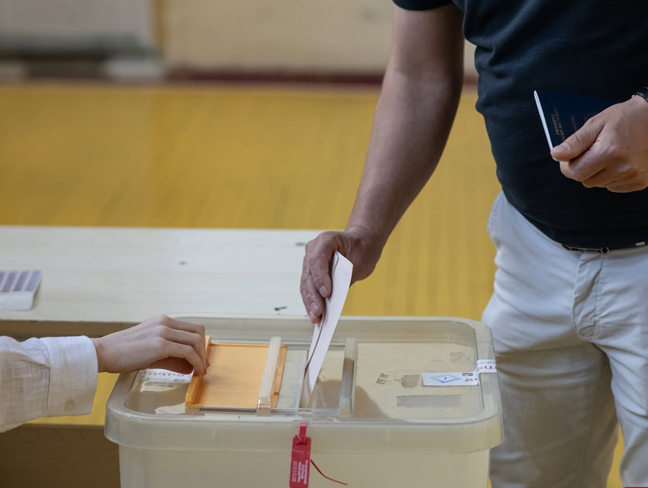
Election-day monitoring identified a total of 217 problems and potential electoral violations at 408 polling stations.
Particular attention was paid to accessibility difficulties at polling stations. Observers identified 125 accessibility-related problems at 101 polling stations. Of these, 96 concerned the absence or inadequacy of facilities for people with mobility difficulties, while 29 related to accessibility arrangements for voters with visual impairments.
In addition, observers documented the following incidents:
- 31 cases involving gatherings of people and vehicles near polling stations, as well as possible monitoring of voters.
- 10 problems related to compliance with requirements ensuring the secrecy of the ballot.
- Cases of family voting at six polling stations.
- Seven incidents involving compliance with the prohibition on election campaigning on voting day.
Observation teams also reported information concerning possible attempts to influence voters’ choices, as well as obstacles encountered by voters in exercising their electoral rights.
Restrictions on observers’ rights emerged as a separate concern, with such incidents recorded at 51 polling stations.
In particular, precinct electoral commissions prevented observers from photographing in full the relevant page of the register containing information about individuals assisting voters. These restrictions were imposed despite a legally binding ruling by the Administrative Court of the Republic of Armenia affirming observers’ right to do so.
Procedural shortcomings were also identified during the vote-counting and results-tabulation stages. These concerned vote-counting procedures, the packaging of electoral documents, the proper sealing and signing of ballot bags, and the completion of relevant official records.
The Akanates observation initiative stated that it would continue examining the identified problems and potential electoral violations while monitoring the responses and measures taken by the relevant state authorities.
The observation mission was conducted with financial support from the European Union, the German Marshall Fund of the United States Transatlantic Foundation (GMF TF), the Prague Civil Society Centre, the European Endowment for Democracy, the National Endowment for Democracy and the Democracy Development Foundation.
The Akanates observation initiative is solely responsible for the content of the document, which does not necessarily reflect the views of the donors.