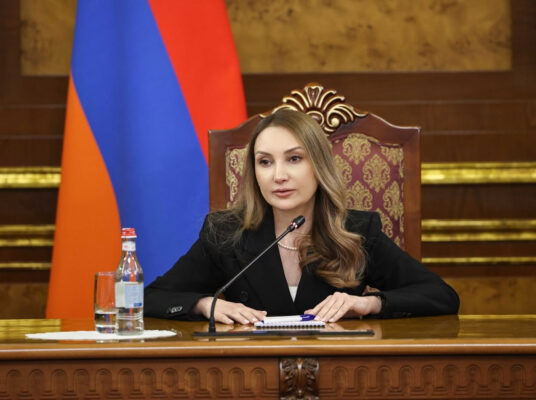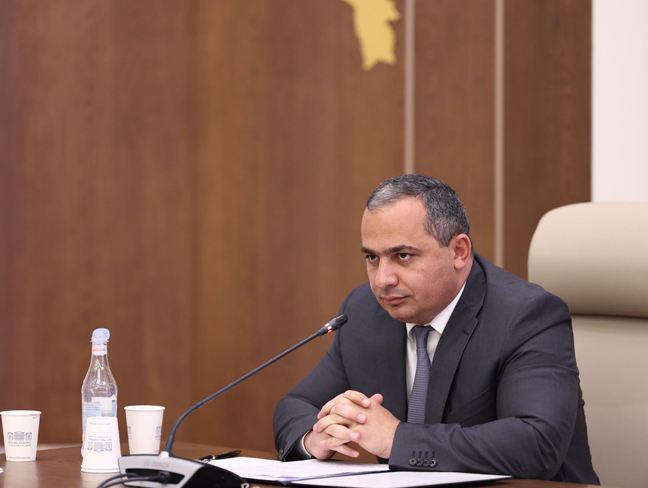
During a National Assembly session, lawmaker Anna Grigoryan asked Investigative Committee Chairman Arthur Poghosyan how public statements containing threats are legally assessed and whether the committee applies the same standards to different individuals.
“If one citizen of the Republic of Armenia tells another, ‘I’ll kill you, I’ll bring you to your knees’… Does such a statement constitute a criminal offense or not?” Grigoryan asked, Factor.am reports.
Grigoryan also cited examples that she said demonstrated differing legal assessments of similar statements made by different political figures.
“When citizen N.P. says that sentence, how is it that you see no criminal offense, but when citizen A.M. says it or writes it on his Facebook page, you find grounds for a criminal offense?” Grigoryan said.
Responding to the lawmaker, Poghosyan said the literal wording of a statement alone is insufficient to determine whether it constitutes a criminal offense. According to him, the circumstances in which the statement was made must also be considered.
“When we consider whether an act contains the elements of a criminal offense, we examine the location, circumstances, time, environment and the individual involved. These are decisive factors… In my opinion, there is nothing criminal there,” the Investigative Committee chairman said.
Poghosyan said statements with identical wording can lead to different legal assessments depending on the circumstances.
“We have had cases… where we concluded that, for example, there was no criminal offense, and we have had cases where, based on the factors I mentioned, we found the elements of a crime. That is what law is — an interesting, very interesting science,” Poghosyan said.
During and after the parliamentary election campaign, Armenian Prime Minister Nikol Pashinyan repeatedly used expressions such as “I’ll kill you” and “I’ll bring you to your knees,” mainly in reference to opposition figures.